Assessment
We look at how you move before changing anything: rotation, single-leg balance, shoulder and hip range, and which side of the body is doing more of the work.
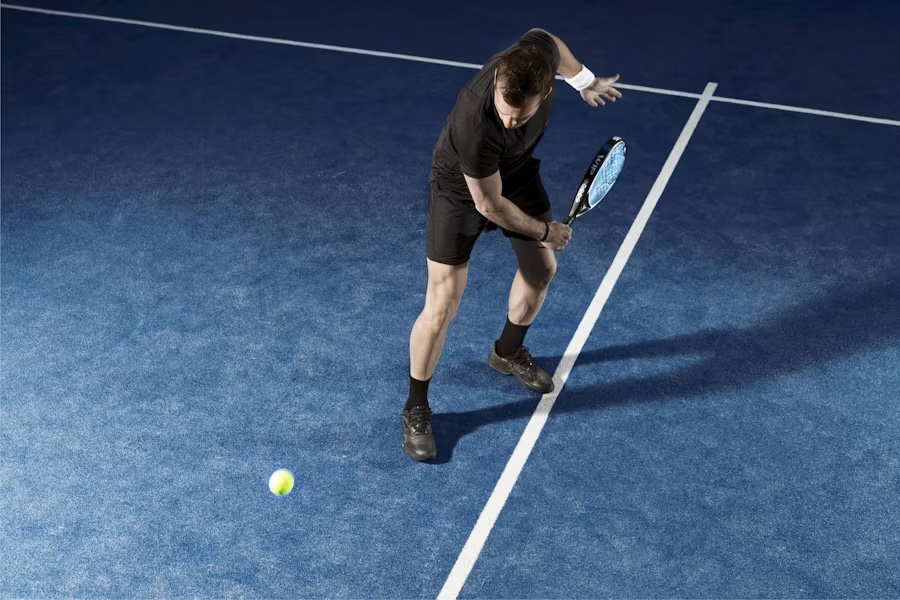
Explosiveness, speed and strength for padel players.
Strength and conditioning for padel players. Not a padel lesson — the work in the gym that makes the first step faster and lets you play the third set like the first.
Padel is a fast game on a small court. A point ends not with the prettiest shot but with whoever got to the ball — and that is a question of conditioning, not technique.
Players who feel their technique is ahead of their body. It usually shows up in three ways. The first step comes too late, and the ball you should have reached goes past. In the third set your legs get heavy and mistakes start creeping in where there were none in the first. Or your shoulder, elbow or back aches after matches, and the next time you play more carefully than you would like.
None of these is solved on court. They are solved in the gym, between matches.
The first step. In padel a sprint is rarely longer than three metres. What matters is not top speed but how fast you leave the spot and how fast you stop. That is plyometric and deceleration work, not running.
Rotation. The smash and the volley come from the hips and the trunk, not the arm. Rotational strength, and the ability to brake that rotation, is what separates a shot that lands from a shot that hurts your shoulder.
Changes of direction. The side step, the lunge, the recovery to position. This is where ankle and knee injuries usually happen, and where single-leg stability work helps most.
Endurance in short intervals. A padel point is short and so is the pause between points. We train that rhythm rather than steady-state effort.
We share the building with PadelStar Teika. In practice that means a few minutes from the court to the gym, and a conditioning session that fits into the same trip you were making to play anyway.
The studio has a 120 m² functional zone, a turf sprint lane and a sled zone — exactly the equipment first-step and deceleration work needs. Machines cannot do it.
The first change is usually felt in movement rather than in strength: the side step gets steadier, stopping feels safer. That comes within three to four weeks. A measurable gain in speed and strength takes eight to twelve weeks of consistent work.
The most valuable thing this programme does over the long run is not points won. It is still being able to play as often in five years as you do now.
We look at how you move before changing anything: rotation, single-leg balance, shoulder and hip range, and which side of the body is doing more of the work.
Strength and stability before speed. Without them, explosive training produces injuries rather than results — especially in the shoulder and ankle.
Plyometrics, the first step, changes of direction and deceleration. The turf sprint lane and the sled zone exist for exactly this work.
Load follows your match schedule. A week with two matches looks different in the gym from a week without them.
€130 / month
For people who want real progress, strength, and athleticism.