Assessment
First we look at how you move: range, stability, and where the body compensates. Without that, strength training only reinforces the existing faults.
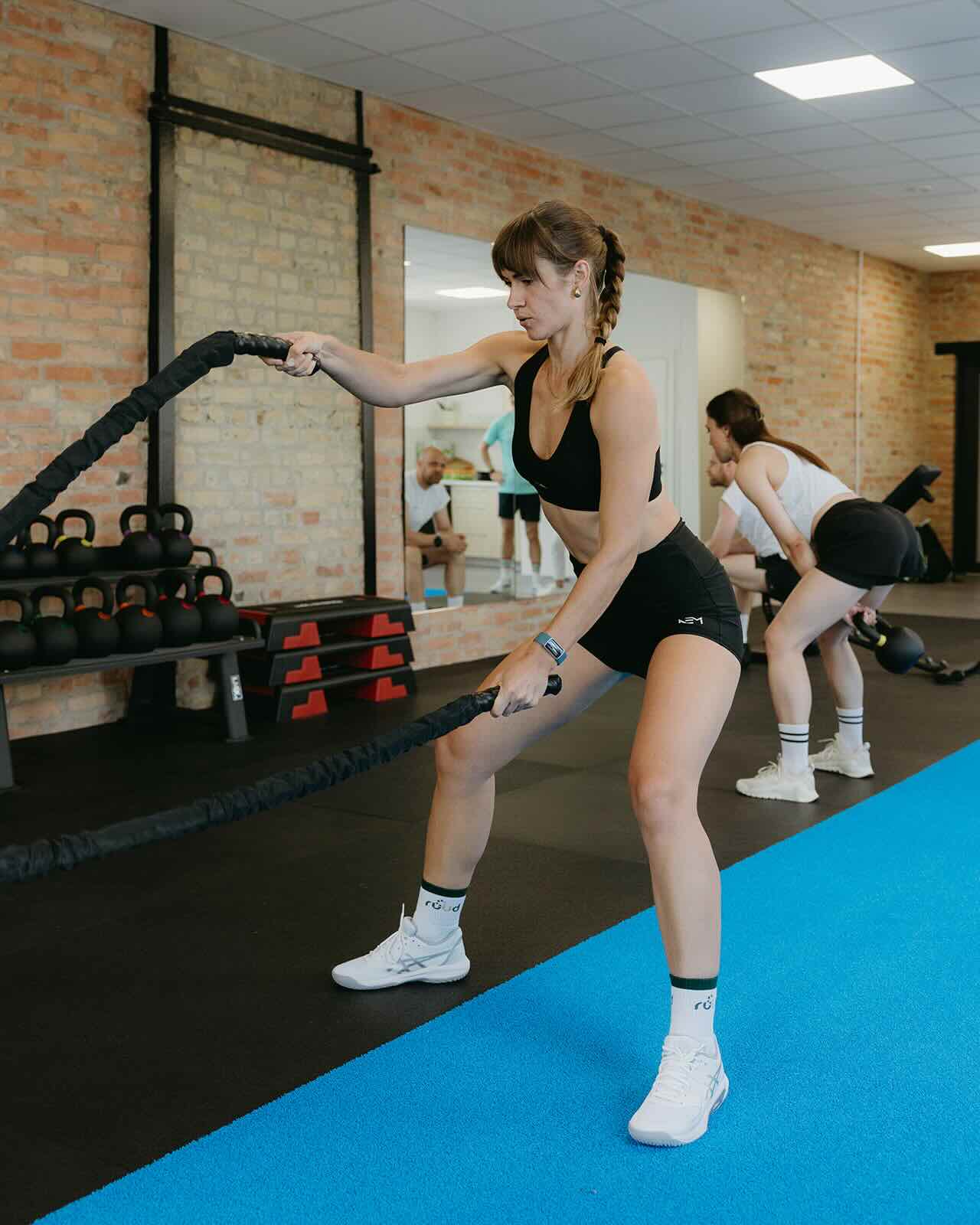
Improving athleticism, speed and movement efficiency.
Athletic Performance is training for people who do not just want to look better but to move better — faster, stronger and without breaking down.
Most gyms teach you to lift weight. Athletic Performance teaches you to move — fast, stable, and in a way your body will still tolerate in ten years.
Strength and athleticism are not the same thing. You can squat a heavy bar and still be unable to change direction quickly. You can be fit and still hurt your back picking a child up off the floor.
Athleticism is a set of qualities working together: strength you can apply quickly, the range of motion in which you can apply it, and the stability that keeps the movement from falling apart under load. That is what we train.
People who play a sport — running, padel, basketball, skiing — and want the gym to help rather than interfere. People who have trained for years to some plan off the internet and noticed that the weight goes up but the movement does not. And people who are simply tired of four flights of stairs being an event.
No competitive background is needed. The word "athletic" here describes how the body works, not where you race.
Strength in the basic patterns. Squat, hinge, push, pull. Not because they are fashionable, but because everything else rests on them.
Power. Plyometrics, jumps, sled push, sprints on the turf lane. This is where strength turns into speed — and where it usually becomes obvious which side is doing more of the work.
Mobility. Hip and shoulder range determine how much of your strength you can actually use. That is why it is in every session, not only when something hurts.
Stability and injury prevention. Single-leg work, deceleration, controlling rotation. The least spectacular and most valuable thing you can do over the long run.
Sessions run in small groups, so the coach sees every repetition and corrects technique on the spot. The load is individual — in the same session someone with twenty years of training and someone who started last month follow one plan with different weights.
The studio has a 120 m² functional zone, a turf sprint lane, a sled zone, free weights and a kettlebell area, so the programme does not have to bend around whatever happens to be free.
The first thing to change is usually the feeling: movement becomes steadier and the squat deeper. That comes within three to four weeks. A measurable gain in strength and speed takes eight to twelve weeks of consistent training.
First we look at how you move: range, stability, and where the body compensates. Without that, strength training only reinforces the existing faults.
The basic patterns — pull, push, squat, hinge — in a technique that holds up under load. Everything else is built on them.
Plyometrics, sled push and sprints on the turf lane. Strength turned into speed — that is the difference between a strong person and an athletic one.
Mobility and recovery are part of every session rather than a separate course. That is why progress does not stall after the second month.
€130 / month
For people who want real progress, strength, and athleticism.