What functional training is, and how it differs from a machine gym
The phrase is worn out from overuse. Here is a definition you can test, and an honest comparison with a machine gym — including the things functional training does not do better.
"Functional training" is now painted on the door of almost every gym, which has left it meaning almost nothing. So it is worth defining in a way you can actually check.
A definition you can test
Training is functional when you train a movement rather than an isolated muscle, and you do it so that what you gain works outside the gym as well.
The test is simple. Look at an exercise and ask two questions: does this movement resemble something you do in life or in sport, and do you have to control your own body while doing it? Two yeses, and it is functional. If the exercise isolates one muscle and a machine handles your balance for you, it is something else. Not worse. Just different.
How it differs from a machine gym
The real difference is not the equipment. It is who does the stabilising work.
In a machine the path is fixed. You push or pull along a rail somebody else has chosen, and your body never has to solve the balance problem. That is the point of the machine, and it is also its merit: load can go up safely even before technique is settled.
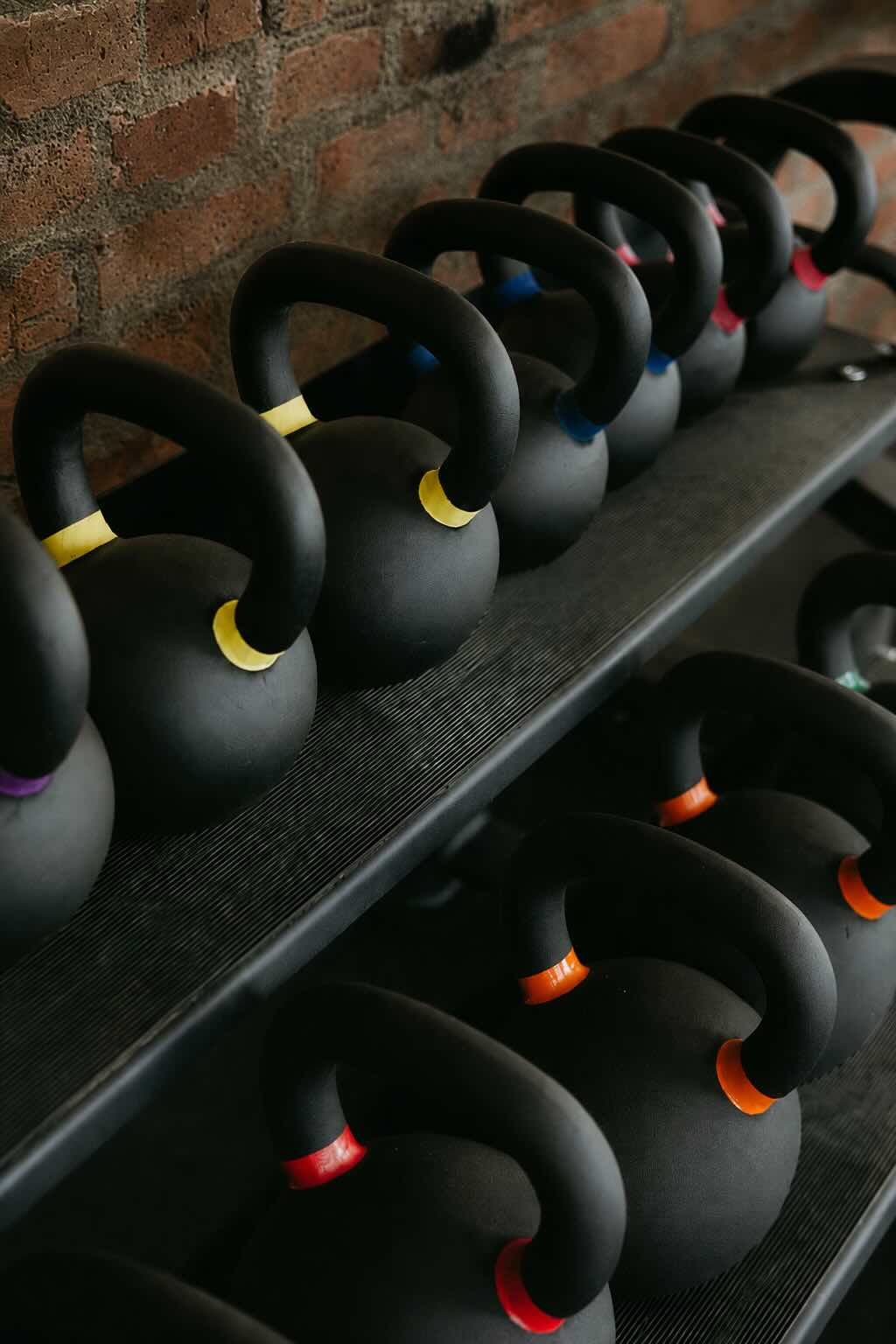
With a free weight, your own bodyweight or an awkward object — a barbell, a dumbbell, a kettlebell, a sled — you hold the path yourself. Alongside the main muscle, everything that keeps the shoulder in place and the spine neutral is working too. That part is what carries over: to the stairs with a bag, to the first step on a padel court, to the moment your foot slips on the pavement.
Honestly, about the other side. If the goal is to grow a particular muscle or to load a joint safely after an injury, a machine is often the better tool, not the worse one. We use those exercises too. The question is what the session is built around and what is an addition to it.
The six basic movement patterns
A functional programme is usually built around six things the human body does:
- Squat — sit down and stand up
- Hinge — pick something up off the floor
- Push — away from you, overhead or forward
- Pull — towards you or upward
- Carry — hold a load and move with it
- Rotate, and resist rotation — turn, or specifically do not turn
If all six appear across a week, the training is functional whatever the sign on the door says. If there is only bench press and biceps, it is not — however well it is done.
What functional training is not
Three common misunderstandings, all common because they look good on social media.
It is not balancing on an unstable surface. A squat on an inflatable dome looks functional, but what it trains is the skill of standing on an inflatable dome. The ground does not wobble.
It is not an exhausting circuit with no plan. Feeling wrecked is not a measurement. Anyone can be wrecked in eighteen minutes without a programme; the hard part is arranging load so that twelve weeks later something has measurably improved.
It is not "the more complicated the better". Most of the result comes from the basic patterns, done properly, with weight that goes up gradually. The exotic variations are seasoning, not the meal.
Functional fitness or functional training?
In practice they are the same thing. "Functional fitness" tends to mean the whole category and the style of training; "functional training" tends to mean a particular session. If somebody tells you the distinction is fundamental, they are probably selling a method.
What it looks like here
We are a functional training studio in Teika, Riga, and a session is usually built the same way: a warm-up that prepares exactly what is about to be loaded; one main strength exercise from the list of six; then accessory work, and conditioning at the end.
The room is 120 m², with a turf sprint lane, a sled zone, kettlebells and free weights. A group holds no more than eight people — the number at which a coach can still see every repetition and correct technique during the session rather than after it.
Who it suits
People starting from nothing, because every basic pattern has an easier and a harder version and you can start at either. People coming back from a break or an injury, because the load can be set per person. And athletes — athletic performance, padel and running conditioning are the same principle with a clearer target.
If you like training alongside other people but not in a crowd, small group training is the format where all of this happens.
Raimonds Zibens
Certified fitness trainer
Runs The FIT Club weekly class schedule, the personal training sessions and The Run Club.
Your first session is free
A one-to-one session with the coach that assesses your physical condition and talks through where to start and how often to train. Free, and nothing to sign.
Book your free session